
89% OFF! — WordPress Hosting, annual: €1.30/mo — 89% OFF! ... CLICK HERE! 89 % RABAT! — WordPress Webhotel, årligt: kr 9.10/md. — 89 % RABAT! ... KLIK HER! 89 % RABATT! — WordPress Webhotell, årlig: kr 14.20/mnd — 89 % RABATT! ... KLIKK HER! 89 % RABATT! — WordPress Webbhotell, årligen: kr 13.00/mån — 89 % RABATT! ... KLICKA HÄR! 89 % RABATT! — WordPress Hosting, jährlich: €1,30/Monat — 89 % RABATT! ... HIER KLICKEN! 89 % DE RÉDUCTION ! — Hébergement WordPress, annuel : 1,30 €/mois — 89 % DE RÉDUCTION ! ... CLIQUEZ ICI !
What is a WordPress webhotel actually responsible for?
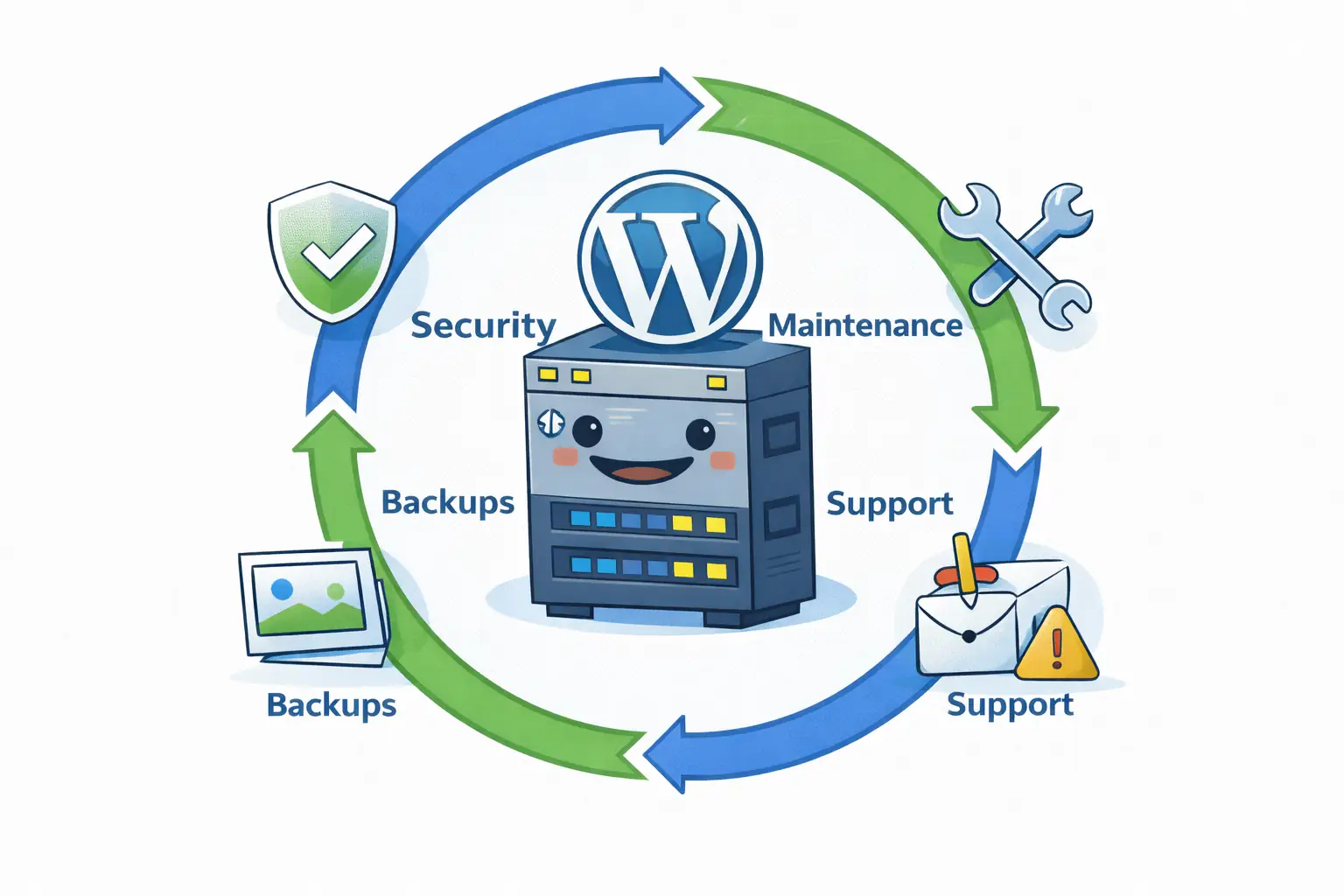
A WordPress webhotel is responsible for the environment WordPress runs in: speed, stability, security, updates, backups, and infrastructure reliability.
What is NOT the responsibility of a WordPress webhotel?
Content, design choices, business strategy, and how WordPress is used — unless the hosting environment blocks or breaks those actions.
Why does responsibility confusion cause so much stress?
When responsibility is unclear, users blame WordPress, hosting blames plugins, and problems never get properly owned or fixed.
Is WordPress difficult to manage by default?
No. WordPress becomes difficult only when responsibility is fragmented across tools, providers, and unclear hosting foundations.
How can I quickly tell who is responsible for a problem?
Ask whether the issue is caused by the environment or by how WordPress is used. Environment issues are hosting responsibility; usage issues are site level decisions.
What a WordPress Webhotel Is Actually Responsible For (And What It Isn’t)
Many WordPress problems feel random.
- The site is slow
- Email suddenly stops sending
- Updates feel risky
- Backups feel unclear
- Support answers don’t line up
The common conclusion is often:
“WordPress is difficult.”
In reality, WordPress is rarely the problem.
Based on patterns we see at WebQuickster, most frustration comes from unclear responsibility — not from the CMS itself.
WebQuickster insight: A consistent pattern we see is that WordPress sites become easier to manage the moment responsibility is clearly defined. When hosting owns the environment and users focus on content and business, stress drops and problems get resolved faster.
What a WordPress Webhotel Must Take Responsibility For
Speed & Performance
- Server response time (TTFB)
- Server level caching
- PHP configuration
- Fast storage (SSD / NVMe)
- Predictable resource allocation
If a site feels slow before content loads, that’s an environment issue — not a theme or plugin problem.
Stability & Uptime
- Consistent uptime
- Isolation between accounts
- Protection against overload
- Predictable behavior during traffic spikes
If your site goes down because another site grows, the environment failed — not WordPress.
Security, Updates & Backups
- Secure server configuration
- Malware protection and isolation
- Support for modern PHP versions
- Safe update workflows
- Reliable backups with real restore capability
A backup that cannot be restored quickly is not protection.
What a WordPress Webhotel Is Not Responsible For
- Your content and publishing decisions
- Your design choices and visual complexity
- How many plugins you install
- Business outcomes or strategy
Hosting supports execution — it doesn’t replace judgment.
The Simple Responsibility Test
When something feels wrong, ask:
“Is this caused by the environment, or by how WordPress is used?”
- If it’s the environment → webhotel responsibility
- If it’s usage → site level decision
This single question prevents most frustration.
Final Thought
A good WordPress webhotel doesn’t add complexity.
It removes it.
If you’re unsure where responsibility lies:
📩 Ask WebQuickster support for a neutral responsibility check.
Just write: “What is my webhotel responsible for?”