
89% OFF! — WordPress Hosting, annual: €1.30/mo — 89% OFF! ... CLICK HERE! 89 % RABAT! — WordPress Webhotel, årligt: kr 9.10/md. — 89 % RABAT! ... KLIK HER! 89 % RABATT! — WordPress Webhotell, årlig: kr 14.20/mnd — 89 % RABATT! ... KLIKK HER! 89 % RABATT! — WordPress Webbhotell, årligen: kr 13.00/mån — 89 % RABATT! ... KLICKA HÄR! 89 % RABATT! — WordPress Hosting, jährlich: €1,30/Monat — 89 % RABATT! ... HIER KLICKEN! 89 % DE RÉDUCTION ! — Hébergement WordPress, annuel : 1,30 €/mois — 89 % DE RÉDUCTION ! ... CLIQUEZ ICI !
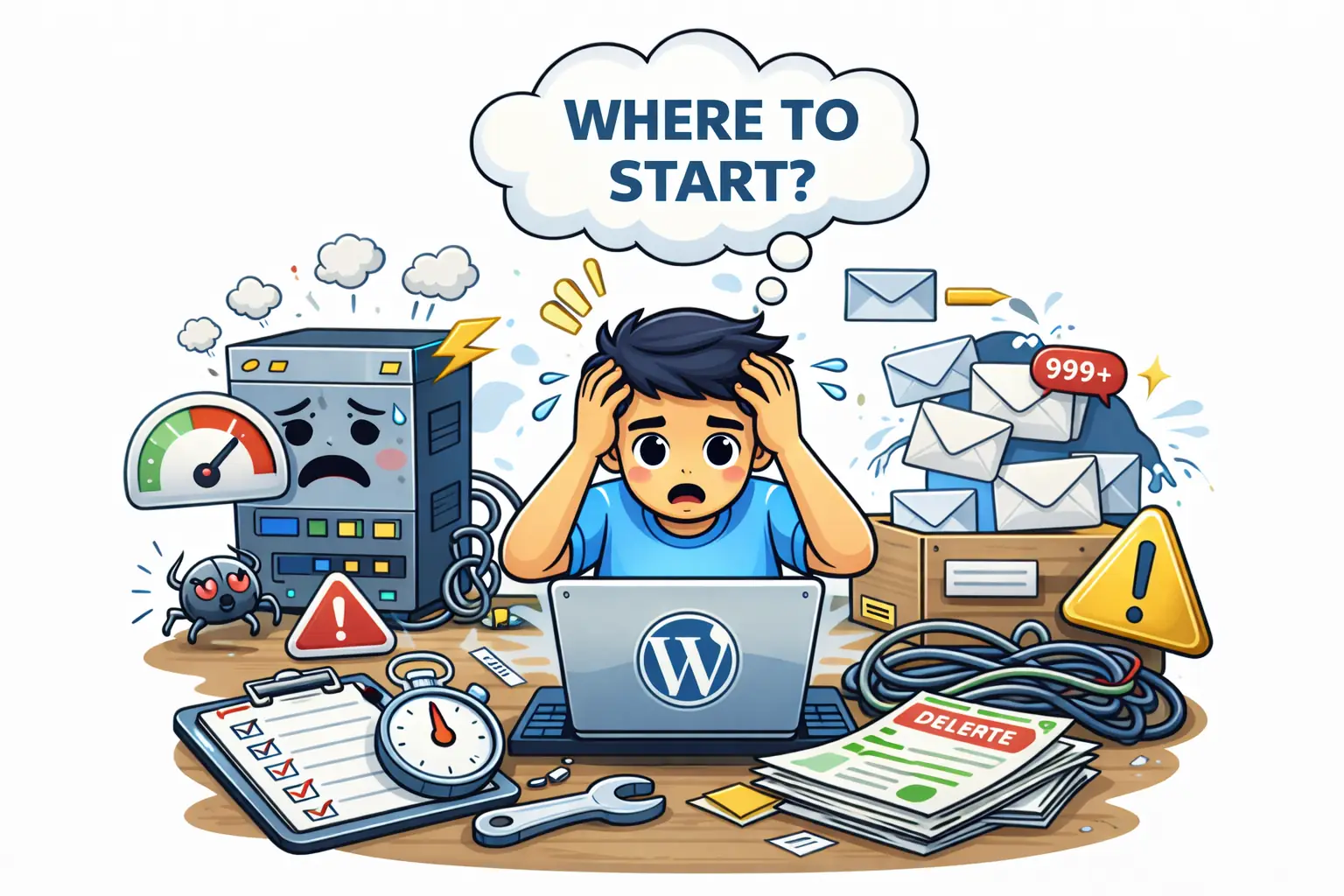
Why does managing a website feel overwhelming?
Because responsibility is fragmented across hosting, domains, email, backups, security, and performance tools that don’t work together.
Is WordPress supposed to feel this complicated?
No. WordPress itself is relatively simple. Most complexity comes from the surrounding setup and infrastructure.
Do I need more tools or plugins to make things easier?
Usually not. More tools often increase maintenance and decisions. Fewer, better integrated tools reduce stress.
What actually makes website management easier?
Clear defaults, predictable recovery, and a setup designed for the site’s purpose — not generic infrastructure.
Why do website problems always feel risky?
Because it’s unclear where changes take effect, who is responsible, and what can be safely undone.
Why Running a Website Feels Harder Than It Should
Many people believe managing a website feels difficult because they’re “not technical enough.”
That’s rarely the real reason.
Based on patterns we see at WebQuickster, most frustration doesn’t come from WordPress itself — it comes from fragmented responsibility.
The Hidden Problem: Everything Is Split
For many website owners, the setup looks like this:
- Hosting from one provider
- Domain from another
- Email somewhere else
- Backups via a plugin
- Security via another plugin
- Performance handled by trial and error
Nothing is broken — but nothing is together either.
Every change feels risky because:
- You’re not sure where the impact lands
- You don’t know who’s responsible
- You don’t know what can be undone
That uncertainty is exhausting.
WebQuickster insight: When everything is managed from one place, website owners stop feeling “behind” — not because they learned more, but because the system stopped asking them to.
Why WordPress Gets the Blame (Unfairly)
WordPress is where problems show up — not where they start.
If email fails, updates feel dangerous, or backups are unclear, the WordPress dashboard is where you notice it. So the frustration gets assigned to WordPress.
In reality, WordPress is often the messenger, not the cause.
The Real Cause: Generic Infrastructure
Most hosting platforms are built to support everything — websites, APIs, custom apps, and random stacks.
WordPress is just one use case among many.
That means:
- No opinionated defaults
- No WordPress specific flow
- No guidance based on site type
- No sense of “what comes next”
The user becomes the integrator. That’s where the mental load comes from.
Why More Plugins Rarely Help
Plugins feel like solutions because they add options and a sense of control.
But every plugin also adds:
- Maintenance
- Update decisions
- Compatibility risk
Eventually the site isn’t hard because it’s powerful — it’s hard because it’s crowded.
Final Thought
Websites that grow steadily don’t feel fragile.
That confidence doesn’t come from skill. It comes from environment.
Websites shouldn’t require courage.
They should require clarity.